








Because of the combination of closeness and the single market. EU membership removes tariffs and simplifies the movement of goods, geographical proximity reduces times and logistics costs, and the euro removes exchange-rate risk across much of the region. Add to that a consumer with high purchasing power and very mature ecommerce markets. It is the expansion with the least operational friction, though each country keeps its own language, payment methods and habits.
Expand Your Ecommerce
to Europe
Europe is the most natural expansion market for a Spanish brand: geographical closeness, membership of the single market, free movement of goods and a consumer with high purchasing power. France, Germany, Italy and Portugal are mature, enormous ecommerce markets, a step away from your current operation. But closeness does not mean uniformity: each country has its own language, its payment methods, its dominant platforms and its buying habits.
At STRAT we have supported ecommerce brands in their European expansion, integrating paid media, email marketing and Shopify under a strategy adapted to each market.










Why it is worth expanding your ecommerce to Europe
Europe combines advantages no other expansion market offers a Spanish brand: membership of the single market removes tariffs and simplifies the movement of goods, closeness reduces logistics times and costs, and the euro removes exchange-rate risk across much of the region. Add to that a consumer with high purchasing power and very mature ecommerce markets such as France, Germany and Italy. For a Spanish brand with a differentiated product, Europe is the expansion with the least operational friction and the most logical gateway to going international.
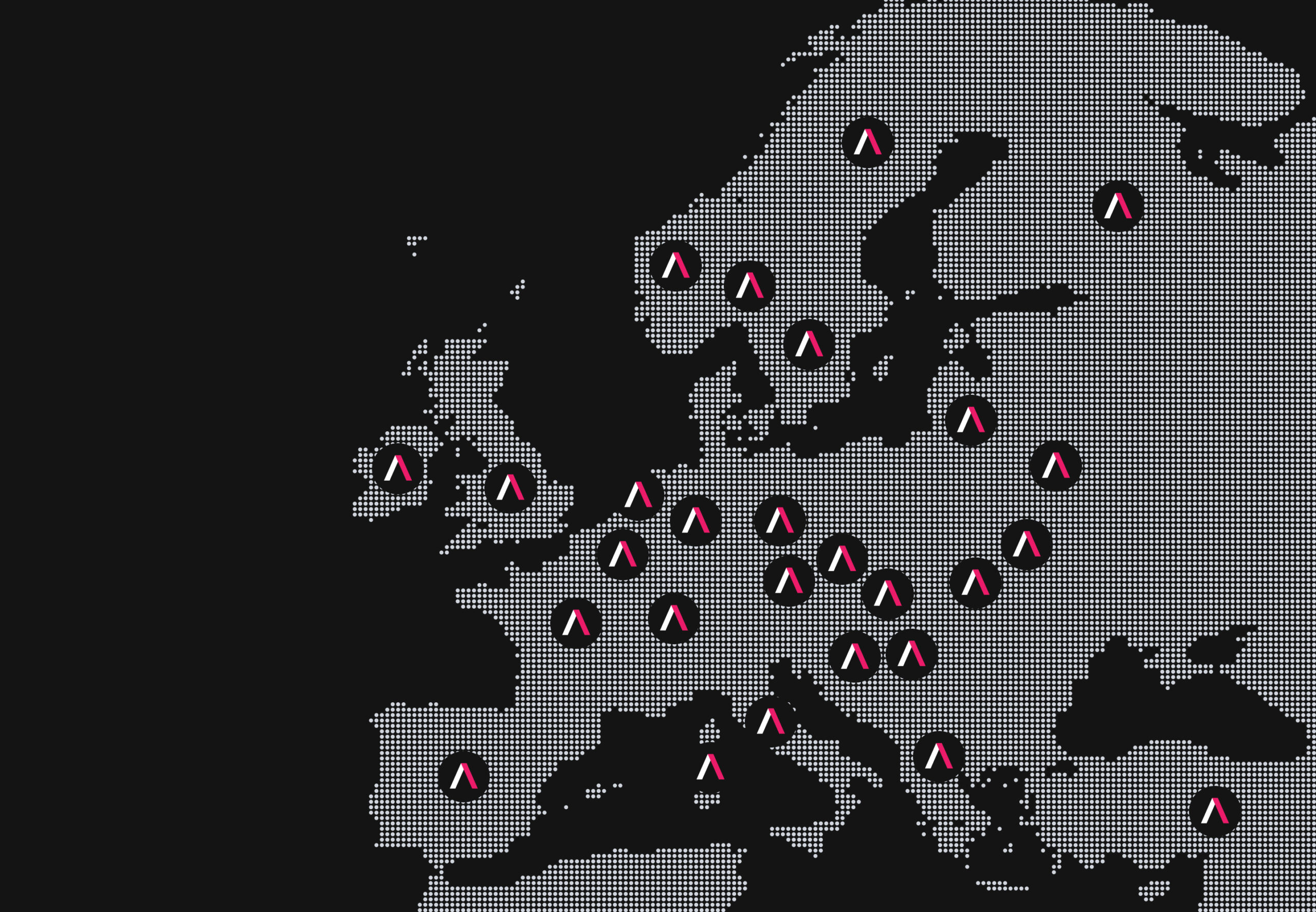
What you need to know to sell in France, Germany, Italy and other European markets
Europe is easier than other markets operationally, but each country is a world of its own in language, habits and preferences. Closeness is deceptive: the most common mistakes come from assuming that what works in Spain works the same way in Germany or France. These are the factors you have to master.

Logistics and the single market
Europe's great advantage. Within the European Union, the free movement of goods removes tariffs and hugely simplifies intra-community shipping. Times and logistics costs are far more favourable than in any other region, and the transport infrastructure is excellent. Even so, each market has its preferred logistics operators and delivery expectations, worth knowing so you can offer the best experience.

Intra-community VAT and taxation (OSS)
European taxation is simpler than in other regions, but it needs attention. With the One-Stop Shop (OSS) system, a brand can manage the VAT on its sales to consumers across the whole EU centrally, applying the destination country's VAT rate once certain thresholds are passed. Understanding how the OSS works, the thresholds and the correct application of VAT by country is key to operating compliantly and setting the right prices.

Local payment methods
One of the costliest mistakes in Europe is assuming a card is enough. Each country has deeply rooted dominant payment methods: in Germany, bank transfer and options like PayPal and pay-on-invoice (Klarna) are essential, and the credit card is used less than in other countries; in the Netherlands, iDEAL is practically compulsory; in France, Cartes Bancaires. Offering the expected local payment method in each market is decisive for conversion.

Language and localisation
Europe does not share a language, and the European consumer expects to buy in their own. Selling in France requires French, in Germany German, in Italy Italian. And translating is not enough: you have to localise the tone, the references and the communication to each culture. The German market, for example, values precision, detailed information and trust; the French one, style and brand. Real localisation, not literal translation, is what makes the brand connect.

Legal framework and consumer protection
The EU has a robust and fairly harmonised regulatory framework for consumer protection, with common rules on the right of withdrawal, guarantees, pre-contractual information and data protection (GDPR). Even so, some countries add their own requirements. Complying with European regulation and each market's local particularities is necessary to operate without risk, and it conveys trust to the consumer.

Channels and buying habits by country
Buying habits and channels vary a lot. The German consumer researches and compares thoroughly before buying and values reviews; the French one is sensitive to brand and design; the Italian one is very mobile and social. The dominant platforms and the weight of each social network change by country. This shapes the paid media and content strategy, which has to adapt to each market rather than replicate the one from Spain.
Why expand to Europe with STRAT?
We are not a generalist agency that also dabbles in internationalisation. We work exclusively with ecommerce and have supported Spanish brands in their European expansion, with real knowledge of the differences between markets: we know that selling in Germany requires different payment methods and a different tone than selling in France or Italy, and that Europe’s closeness does not remove the need to genuinely localise.
We apply that experience with a team officially certified by Meta, Google, Shopify, Klaviyo and Omnisend, integrating acquisition, retention and technology into a single strategy adapted to each market. We make the most of the single market’s advantages without falling into the trap of treating Europe as a uniform market. Every decision is made with business judgement and reported connected to the P&L, measured in POAS.
How we help your brand sell
in Europe
We apply to your European expansion the three pillars that define an ecommerce's growth, adapted to each market in the region. We do not manage isolated channels, we build a complete system of acquisition, retention and conversion designed for each European country you expand into.
Paid Media for the European markets
Diseñamos y gestionamos campañas en Meta Ads (Facebook e Instagram), Google Ads y TikTok Ads adaptadas a cada país: segmentación por mercado, creatividades y mensajes localizados a cada idioma y cultura, y adaptación a las plataformas y hábitos dominantes de cada región. Ajustamos la inversión a los distintos niveles de coste y competencia de cada mercado europeo, midiendo todo en POAS para asegurar que cada país expande de forma rentable.
Read More →
Email Marketing and Retention
Construimos el canal de retención con Klaviyo y Omnisend adaptado a cada mercado europeo: flujos localizados por idioma, adaptación a las estacionalidades de cada país y estrategias de recompra que maximizan el LTV. Aprovechar el mercado único para expandir es eficiente, pero la retención bien localizada es lo que convierte esa expansión en un negocio rentable y recurrente en cada país.
Read More →
Shopify Development and CRO
Preparamos tu tienda Shopify para vender en Europa con Shopify Markets: gestión de idiomas y del IVA por país (con el marco OSS), configuración de los métodos de pago locales que cada mercado espera (iDEAL, Klarna, Cartes Bancaires y otros), adaptación de la experiencia de compra a cada cultura y optimización de la conversión. Una tienda que no ofrece el método de pago local de cada país pierde ventas incluso en el mercado más cercano.
Read More →Our Latest Case Studies
Do you want to expand your ecommerce to Europe?
Frequently Asked Questions
With the One-Stop Shop (OSS) system, a brand can centrally manage the VAT on its sales to consumers across the whole European Union. Broadly, once a common intra-community sales threshold is passed, the destination country’s VAT rate applies, and it is declared through the OSS with no need to register in each country. Understanding how the OSS works, the thresholds and the correct application of VAT by country is key to operating compliantly and setting the right prices.
No. The European consumer expects to buy in their own language, and English is not enough in markets like France, Germany or Italy. Selling well in each country requires localising the store, the communication and the campaigns to its language and culture, not just translating. Real localisation (tone, references, expectations) is what makes the brand connect and convert in each market.
They vary a lot by country and are decisive for conversion. In Germany, pay-on-invoice (Klarna), PayPal and bank transfer carry a lot of weight, and the card is used less; in the Netherlands, iDEAL is almost indispensable; in France, Cartes Bancaires. Assuming a card is enough is one of the costliest mistakes when expanding to Europe. We configure the local payment methods each market expects.
It is the simplest of all the expansion regions, thanks to the single market. Within the EU, the free movement of goods removes tariffs and simplifies intra-community shipping, and the transport infrastructure is excellent, with very favourable times and costs due to closeness. Each market has its preferred operators and delivery expectations, worth knowing, but the logistics friction is far lower than in any other region.
Yes, and it is usually advisable. Starting with one market (France, Italy and Portugal are common entry points for Spanish brands due to closeness and affinity) lets you validate the expansion with controlled investment before scaling to the rest of Europe. We define the entry country based on your product, your category and each market’s potential, and we expand progressively, making the most of the single market’s advantages.