









Marketing Agency for Footwear and Leather Goods Ecommerce Brands

We work with footwear, bag, leather goods and accessories ecommerce brands that need to professionalise their marketing in a sector where a high AOV comes with longer decision cycles, product quality is judged visually and in detail, and sizing and fit determine the return rate the business actually runs on.

We bring paid media, email marketing, CRO and international scaling together and run them against the same view of the business, building acquisition and retention systems for brands with premium product, long use cycles and visually demanding catalogues.

Why footwear and leather goods need their own playbook

High AOV, longer decision cycles

Where fashion can be an impulse purchase, footwear and leather goods carry a significantly higher average order value, and the customer usually needs several visits, comparisons and moments of reassurance before committing. That calls for campaign structures combining discovery traffic, extended retargeting and email sequences that stay with the journey without wearing the customer out.

Returns driven by fit and sizing

A footwear brand can run return rates of 30 to 40% if fit, sizing and materials are not handled properly on the product page. Returns erode POAS and margin more severely here than in other sectors, because reverse logistics costs more on this kind of product. Without building the real return rate into the calculation, ad spend decisions are being made on misleading data.

The product as a visual object

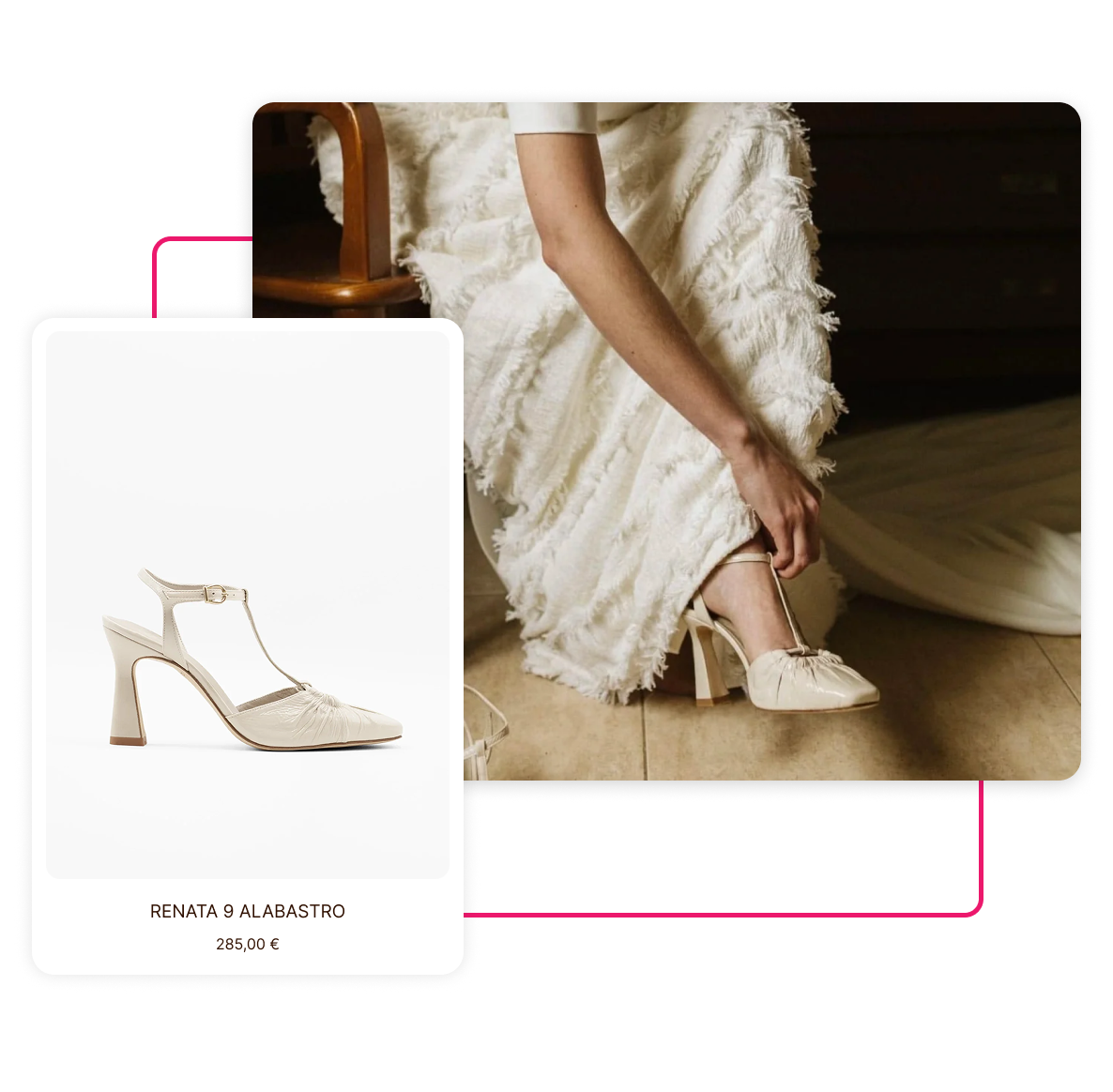
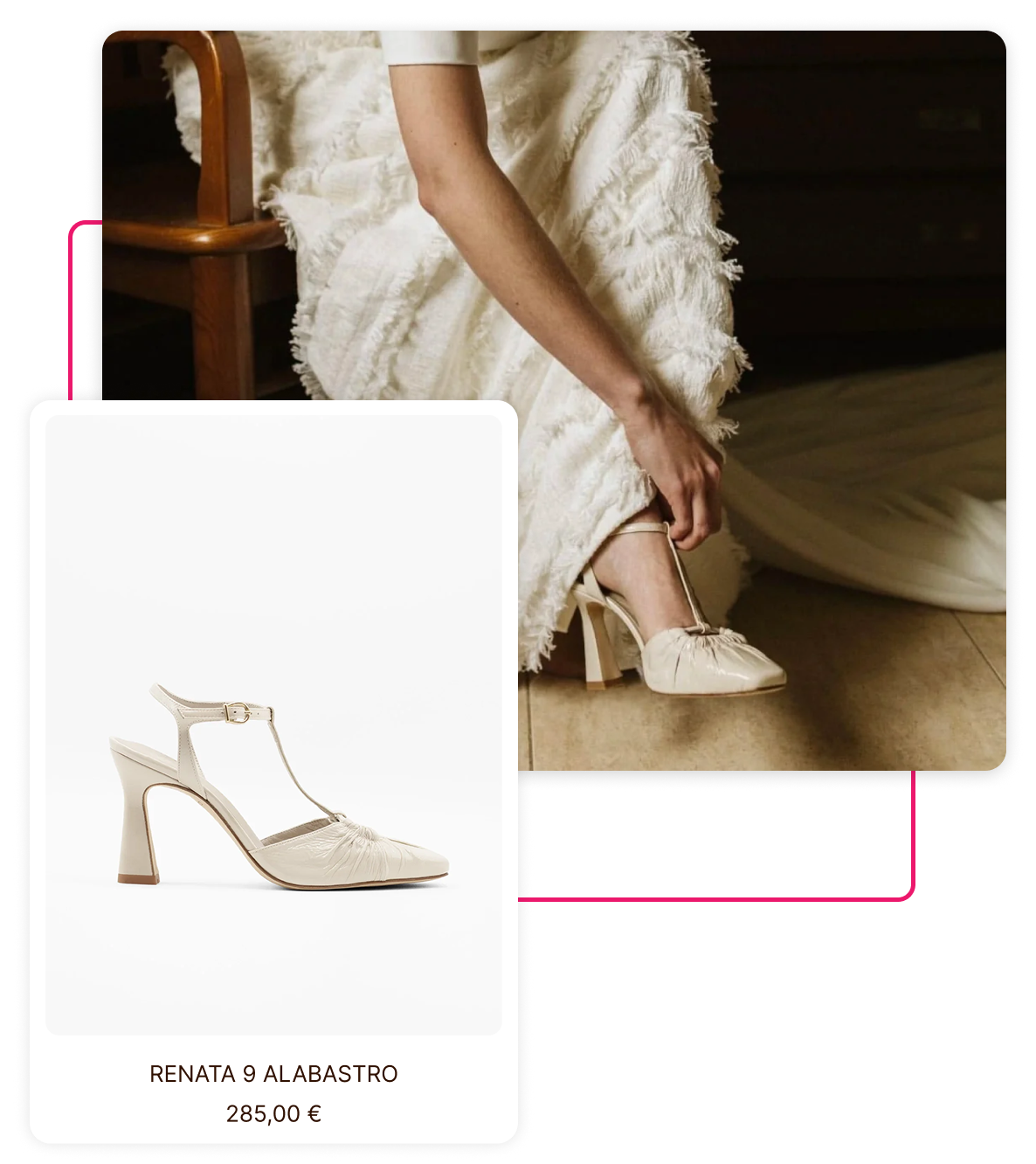
In footwear, bags and leather goods, the customer inspects details: stitching, materials, finishes, hardware, the exact colour in natural light. Photographic quality and the visual depth of the catalogue decide the conversion. A premium product with mediocre photography sells like a mid-market one, and a mid-market product with exceptional photography can compete with premium.

Moderate repeat purchase, and the weight of cross-sell

A footwear brand has a longer repeat-purchase cycle than beauty and a more predictable one than fashion. LTV grows through cross-sell across categories (footwear into bags, bags into accessories) and through retention flows that stay with the customer across the season and into the next. Email carries real weight here, but its strategic role is different from beauty.

Footwear and leather goods brands that work with STRAT

We work with footwear, bag, leather goods and accessories brands at different points in their life cycle, from growing DTC labels to established accounts looking to professionalise their acquisition and retention structure. These are some of the names we currently work with.

Our services applied to footwear and leather goods ecommerce brands

Paid media for footwear and leather goods brands

We run acquisition with Meta Ads as the main engine, Google Ads and Performance Max to capture existing demand (particularly relevant here, where customers actively search by brand, model and category), TikTok Ads for discovery among younger audiences, and Pinterest Ads for bags and occasion footwear. Retargeting is built for the longer decision cycle, with extended windows and feeds carrying detailed material, colour and fit attributes.
Read more →

Email marketing and automation for footwear and leather goods brands

We build retention systems in Klaviyo and Omnisend for this vertical: welcome flows segmented by category interest, abandonment flows with wide windows that match the decision cycle, post-purchase flows aimed at cross-sell into complementary categories, and winback timed to new collections. Email does two jobs here: it holds the relationship together between purchases that are more spaced out than in beauty, and it drives the cross-sell into adjacent categories that multiplies LTV.
Read more →

CRO and Shopify development for footwear and leather goods brands

We optimise conversion on Shopify stores at the points that decide this sector: product pages with complete fit, sizing, material and origin information, size guides that convert between systems (EU/US/UK) to bring returns down, zoom and close-up imagery of finishes, clear and frictionless variant handling, and a simplified checkout for high-ticket product. Conversion here is won in the details a customer reads as quality and reassurance.
Read more →

International scaling for footwear and leather goods brands

Footwear and leather goods travel well, particularly for brands with a distinct design identity. We handle the full process: market validation with test budgets, the technical setup of Shopify Markets, creative and copy localised by culture, size conversion by country (unusually complex in footwear, where the EU, US, UK and Asian systems diverge significantly), and shipping, customs and return policies handled market by market. Every market is validated before it is scaled.
Read more →

Average results across footwear and leather goods clients (first 12 months)

120%

Revenue growth

75%

POAS improvement

2x

Repeat orders

-20%

CAC reduction

Why STRAT for your footwear brand?

We do not work with footwear or leather goods brands on the side. We work only with ecommerce, and within ecommerce we have built real depth in verticals like this one, where AOV is high and decisions take time. We know the real benchmarks: target POAS for a premium footwear brand is not the one for occasion leather goods, and the campaign structure that scales a bag brand will not carry men’s footwear.

We apply that specialisation with a team officially certified by Meta, Google, Shopify, Klaviyo and Omnisend. Every decision on your account is made against tested sector criteria and reported against your P&L, not against isolated platform metrics.

Looking for marketing support for your footwear brand?

Frequently Asked Questions

The right mix depends on the price bracket, the target customer and the main category. As a general rule, Meta Ads remains the main discovery channel, complemented by Google Ads and Performance Max to capture existing demand. Google carries more weight in this vertical than in most, because customers actively search by brand, model and category.

TikTok Ads works well for discovery among younger audiences and in streetwear categories, while Pinterest Ads converts solidly for bags, occasion footwear and premium leather goods. Campaign structure is built around the customer’s longer decision cycle.

Three main factors:

First, AOV is significantly higher, which lengthens the decision cycle and calls for longer retargeting structures and email sequences.

Second, visual detail matters more (stitching, materials, hardware, finishes), which gives disproportionate weight to photographic quality and to what the product page actually shows.

Third, repeat purchase is more spaced out than in fashion, but cross-sell across categories (footwear into bags, bags into accessories) generates most of the LTV growth.

We work with brands at different points in their life cycle, from those building their first acquisition and retention programme to established accounts looking for deeper analytical sophistication and channel diversification. Fit depends less on size than on the match between the stage of the business and the operational depth we bring.

Each case needs a different architecture, and our job is to define which one is right given the catalogue, the AOV and the potential for repeat purchase and cross-sell.

We handle the full process: market validation with test budgets before committing spend, the technical setup of Shopify Markets to run multiple countries from one platform, creative and copy localised by culture, size guides converted by country (unusually complex in footwear, where the EU, US, UK and Asian systems diverge), shipping and customs handled for high-ticket product, and return policies set per market. International expansion in this vertical is particularly sensitive to logistics cost and to sizing accuracy.

Email does two jobs here. It holds the relationship together between purchases, which are more spaced out than in beauty: the average customer returns every four to nine months depending on the category. And it is the main tool for cross-sell into complementary categories (footwear into bags, bags into accessories), which is where most LTV growth comes from.

A brand running email well can attribute 25 to 35% of revenue to the retention channel, weighted towards new-arrival campaigns and category cross-sell flows.

Returns driven by fit and sizing are one of the main things eroding POAS and margin in this vertical. We work on several fronts at once: product pages with detailed size guides and conversion between systems (EU/US/UK), clear information on fit and shape, on-foot video where it is viable, creative that sets accurate expectations, and reporting that cross-references return rate by channel, by model and by size, so investment decisions are made on real margin rather than gross revenue.