








A brand is ready when it has established its home market with an acquisition and retention structure that works profitably and predictably. Expanding to compensate for a home market that is not working usually makes the problems worse rather than solving them, because it multiplies operational complexity without having fixed the foundations. The right moment is when the brand has a validated product, healthy margins and a marketing system already producing consistent results at home, and is looking for new routes to growth.
International Expansion Agency for Ecommerce Brands
We work with ecommerce brands that have established their home market and want to expand internationally without giving up profitability. Expanding is not translating the store and switching on international shipping: it is a project that touches acquisition, retention, technology and operations at the same time.
We bring multi-country paid media, localised retention and Shopify Markets architecture together and run them against the same view of the business. Every new market is validated with test budgets before spend is committed at scale.
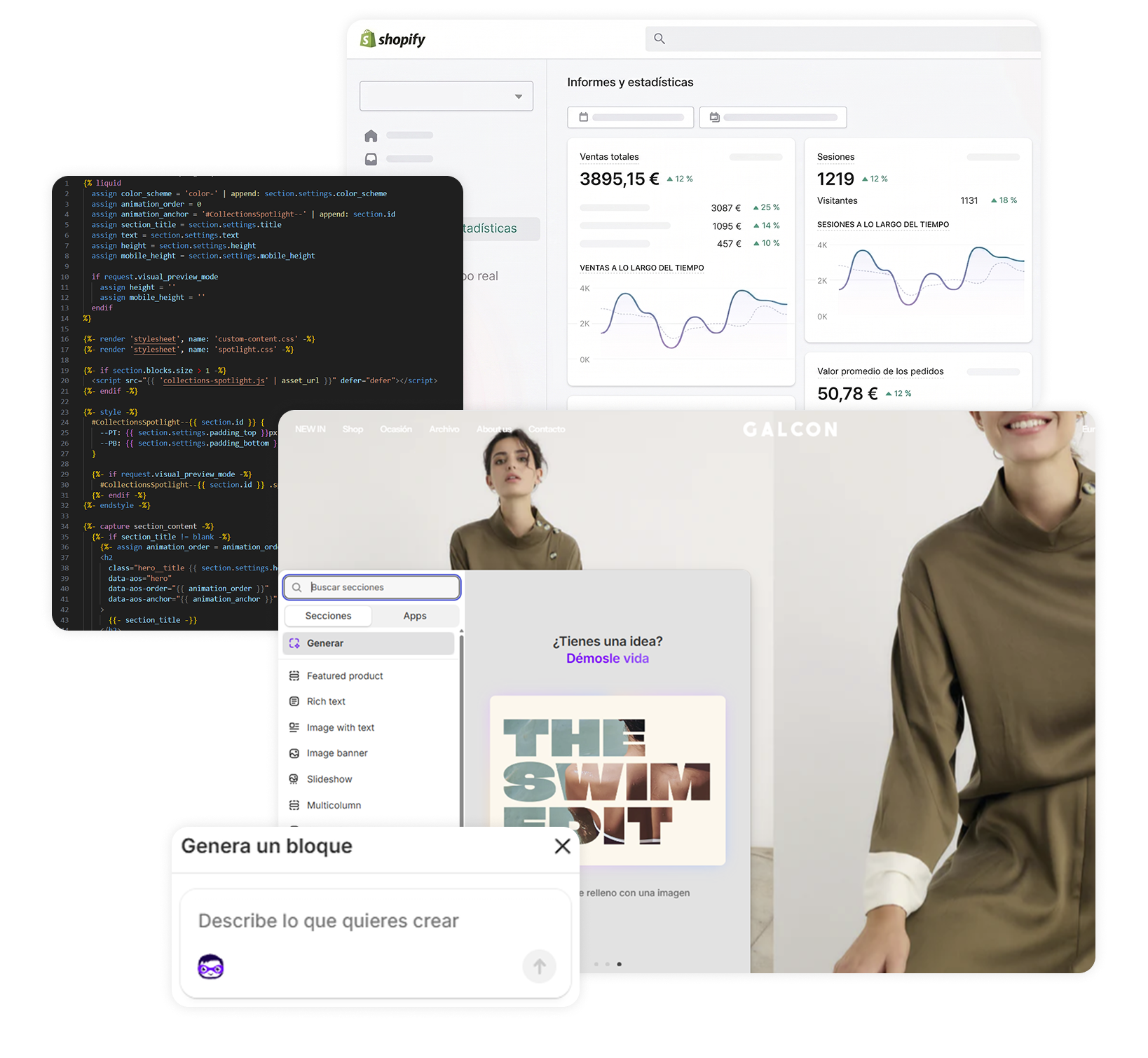













What makes international expansion profitable and what makes it fail
Most brands that try to expand do it by replicating in other countries exactly what works in their home market. It is the most common mistake and the most expensive one. Every market has its own competitive structure, buying behaviour and acquisition cost. These are the factors that separate a profitable expansion from one that burns cash.

Validation before scale
The most expensive mistake in international expansion is committing spend at scale to a market that has not been validated. We enter each market with test budgets that confirm whether real demand exists and at what acquisition cost, before scaling. A market that does not work on a validation budget will not work on a large one: it will only lose money faster.

Localisation, not translation
Translating the site and the creative is not expanding. Every market has its own cultural references, aesthetic standards, price sensitivity and ways of communicating. We localise the message, the creative and the value proposition for each market rather than translating literally what works at home, which is one of the most frequent causes of high CAC in new markets.

Technical architecture in place from day one
Running several markets from a badly structured store multiplies operational complexity and errors. Shopify Markets handles currencies, languages, domains, taxes and catalogues per market natively. Setting that architecture up properly from the start avoids having to rebuild the store once the expansion starts to grow.

Logistics and operations as part of the equation
A market can have demand and a profitable CAC, and stop being profitable once you add international shipping, customs, cross-border returns and taxes. Real international profitability is calculated with all those costs inside it, not with campaign POAS alone. That is why we assess the full operational viability of each market before recommending it.
Markets where we have hands-on experience
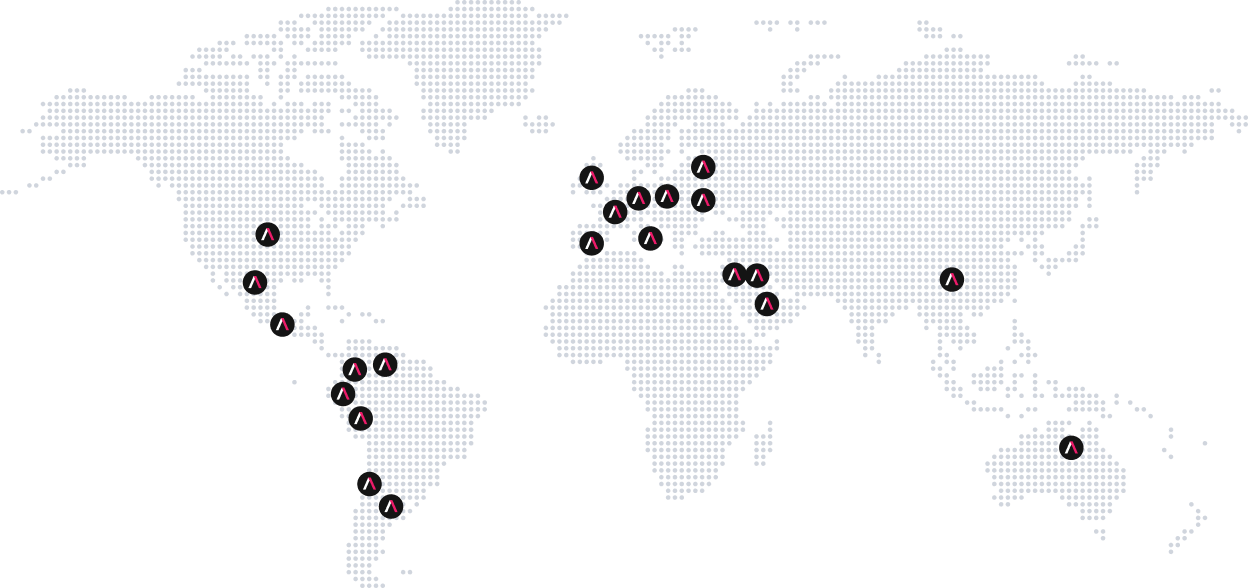
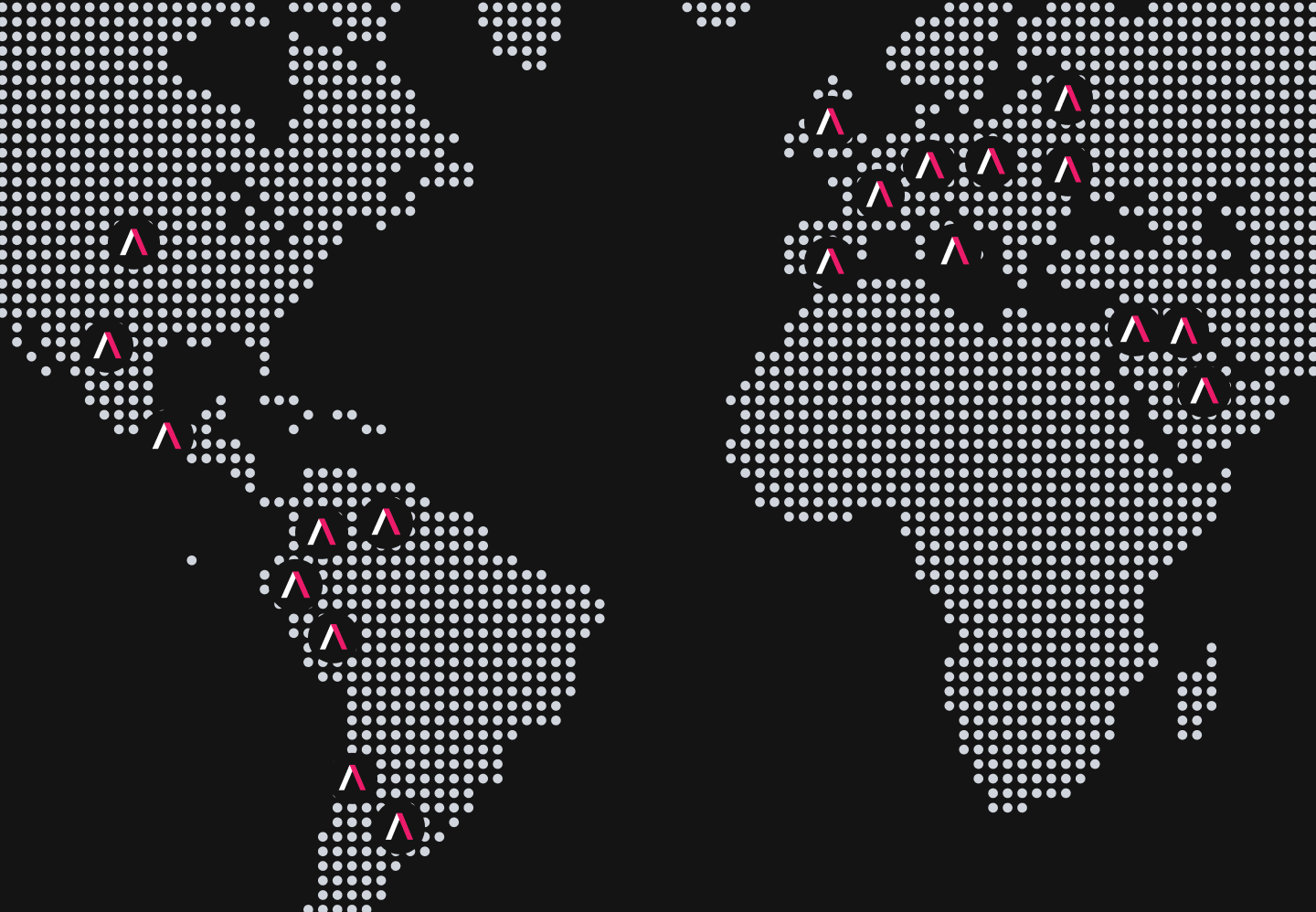
We have supported expansion into markets worldwide, mainly across Europe, the United States, Latin America and the Gulf region, four areas with very different dynamics. Europe offers logistical proximity and a common regulatory framework. The United States is the largest ecommerce market in the world, with enormous volume and a consumer who is receptive to brands with a clear identity. Latin America shares language and cultural affinity across ecommerce markets in full expansion. And the Gulf concentrates high-spending markets with a high average order value, well suited to premium brands. Our job is to identify which of them fit your brand before you commit spend.
Europe
The lowest-friction expansion for any brand already selling on the continent, thanks to the single market, logistical proximity and a shared currency. We help you sell in France, Germany, Italy, Portugal, Spain and the rest of Europe, with the localisation and payment methods each country expects.
Read more →United States
The largest ecommerce market in the world, demanding and competitive, with enormous potential for volume. We help you sell in the United States, handling sales tax by state, logistics and the expectations of the American consumer.
Read more →Latin America
The market with the lowest language barrier for Spanish-speaking brands and one of the fastest-growing ecommerce regions worldwide. We help you sell in Mexico, Colombia, Chile, Argentina and the rest of the region, with the local payment methods and channels consumers expect.
Read more →The Gulf
One of the highest-spending regions in the world, with growing appetite for European product. We help you sell in the United Arab Emirates (Dubai), Saudi Arabia, Qatar and the rest of the Gulf, with a working knowledge of its logistics, its payment methods and how people buy there.
Read more →How we apply paid media, retention and technology to your expansion
International expansion is not a standalone service, it is the coordinated application of the three pillars we already run (acquisition, retention and technology) to opening new markets. Every country has its own acquisition cost, payment methods and way of buying, so we work all three fronts adapted to each market rather than replicating what works at home. This is how we approach each front.

Multi-country paid media
We structure campaigns across Meta, Google, TikTok and Pinterest segmented by market, with budgets set according to the phase each country is in (validation, growth or scale) and creative localised for each culture. Every market is measured independently, because acquisition cost and buying behaviour vary significantly between countries.
Read more →
Localised retention and email
We adapt retention systems in Klaviyo and Omnisend to each market: language, segmentation by geography, send times by time zone and offers matched to local price sensitivity. Retention matters especially in international expansion because acquiring a customer in a new market is expensive: maximising their LTV through localised retention is what makes the expansion profitable over the medium term.
Read more →
Technical architecture with Shopify Markets
We configure Shopify Markets to run multiple countries from a single store: native handling of currencies, languages, local domains, taxes and pricing per market, along with catalogue adaptation and stock availability by geography. A technical architecture built properly from the start lets you scale into new markets without rebuilding the store each time.
Read more →Why STRAT?

We are not a generalist agency that also helps brands expand. We work only with ecommerce, and international expansion is the natural consequence of running acquisition, retention and technology under a single view of the business. Most agencies treat expansion as a translation and shipping project. We treat it as what it is: a business project where every market has its own profitability equation.
We apply that specialisation with a team officially certified by Meta, Google, Shopify, Klaviyo and Omnisend, with hands-on experience in Shopify Markets and in expansion across European markets. Every decision on your expansion is made against tested business criteria and measured market by market, not as a single block that hides uneven results.
Our Latest Case Studies
Thinking about expanding your ecommerce brand internationally?
Frequently Asked Questions
As a general rule, the European markets closest logistically and culturally to your own tend to be the most profitable entry points, thanks to shorter shipping distances, the EU’s common regulatory framework and lower delivery costs. That said, the right choice depends on the product, the language, the competitive landscape in each market and where organic demand for your brand already exists. That is why we validate each market with test campaigns before recommending an expansion roadmap.
Shopify Markets is the Shopify functionality that lets you operate in several countries from a single store, handling currencies, languages, local domains, taxes and pricing per market natively. It matters because it removes the need to build and maintain separate stores per country, which multiplies cost and complexity. A correct Shopify Markets setup lets you scale into new markets quickly and keep operations unified, rather than managing several disconnected stores.
The real profitability of a market is not measured on campaign POAS alone, but by including every cost of operating in that country: acquisition cost, international shipping, customs where they apply, cross-border returns, local taxes and payment gateway fees. A market can show an attractive campaign POAS and stop being profitable once those costs are added. That is why we assess the full operational and financial viability of each market before recommending that you scale spend.
Initial validation of a market usually takes four to eight weeks of controlled spend on test campaigns, the time needed for the algorithms to accumulate enough data and for us to assess real acquisition cost, audience response and local conversion behaviour. That validation phase lets you decide whether to scale, adjust or withdraw from a market on real data, rather than committing large budgets to untested assumptions.
We handle it as an integrated piece, which is what makes it work. International expansion connects paid media, retention and technology applied to opening new markets, so it makes little sense to treat it as a standalone service. We can take on the expansion of brands we already manage in their home market, or come in specifically to lead the expansion process and coordinate with existing teams or agencies. Either way, the point is that acquisition, retention and technical architecture work under one expansion strategy.