







SEM Agency
for Ecommerce

We run SEM campaigns for ecommerce brands with one clear goal: capturing demand that already exists. SEM is search engine advertising, and it puts your store in front of the people searching Google for exactly what you sell, at the moment they want to buy it.

As an official Google Partner, we run search and Shopping campaigns to capture that purchase intent without overpaying for traffic that was already yours. We always measure in POAS, separating the spend that brings real margin from the spend that only adds revenue.

What SEM is and why you need it

SEM stands for Search Engine Marketing, advertising on search engines. For an ecommerce brand it means appearing prominently on Google when someone searches for a product, a category, or a specific brand.

Many people arrive searching for a “SEM agency” without being entirely sure what it involves, and the underlying idea is simple. Right now there are people searching Google for exactly what you sell, with the buying decision already made or nearly so. SEM puts you in front of them at that instant. It’s the fastest way there is to capture demand that’s already there, instead of waiting to create it.

What sets SEM apart for ecommerce

We treat SEM as a demand-capture discipline, not an ad account on autopilot. Every decision is validated with data and tied to its real impact on profitability. Here's how we approach it.

You capture demand, you don't create it

SEM reaches people who are already searching for your product or category with active buying intent. It's the fastest way to turn existing demand into sales, unlike social channels, which create interest in people who weren't looking for you yet.

SEM and SEO combine, they don't compete

SEM delivers results from day one while SEO matures over months. Over time, SEO reduces your dependence on paid spend. Run in parallel, your acquisition becomes more profitable and less fragile.

Every search has a different intent

Bidding on everything the same way wastes budget. We separate brand, generic, competitor, and long-tail terms to assign bids and budget according to the real value of each type of search.

Profitability over volume

Capturing demand is easy if you ignore margin. We optimise for POAS, prioritising the searches that leave real profit over the ones that only inflate the revenue figure.

When is SEM the right lever for your ecommerce

SEM fits especially well when:

  • You’re launching a brand or a new category and need sales from day one, without waiting to rank organically.
  • You sell products with active search, where people already type the kind of item you offer into Google.
  • You work with strong seasonality and need to switch demand on and off at the right point in the season.
  • You already invest in SEO and want to capture demand while your organic positions finish climbing.
  • You rely too heavily on a single social channel and want to diversify acquisition with a high-intent traffic source.

What SEM includes for an ecommerce

Search campaigns

Text ads on your brand searches and the generic terms in your category, filtered by purchase intent.

Google Shopping

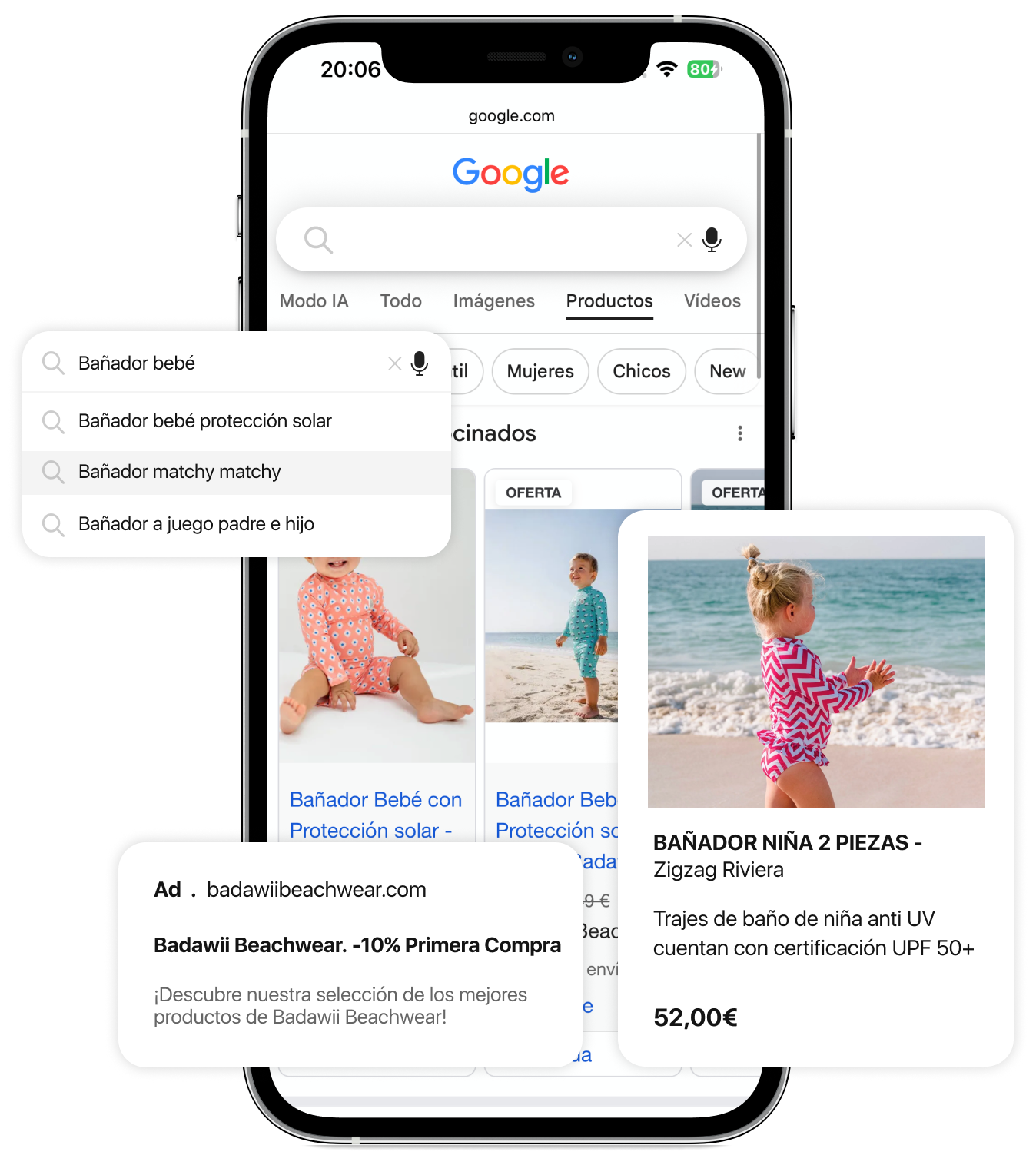
Your products with photo, price, and store shown directly in the results, powered by an optimised product feed.

Search remarketing

Bringing back the people who visited your store and didn't buy.

Why STRAT?

We work exclusively with ecommerce and know the dynamics of Search and Shopping applied to online stores. We know when a brand search is being overpaid for, when the feed is limiting performance, and when it’s better to cede a position to SEO rather than bid for it.

We apply that specialisation as an official Google Partner, with access to support and ongoing training. Every decision on your account is made with business judgement and reported in POAS tied to your P&L, not in isolated platform metrics.

Interested in SEM for your ecommerce?

Frequently Asked Questions

SEM is paid search advertising, with immediate results while spend is active. SEO is organic ranking, slower, building a lasting asset without paying per click. In ecommerce the usual approach is to combine them: SEM captures demand from day one and SEO lowers the cost of acquisition over the medium term.

In practice, almost. SEM covers advertising on any search engine, but Google holds nearly all the searches, so the bulk of SEM runs on Google Ads. You can see how we handle it in detail on our Google Ads for ecommerce page [internal link → Google Ads service].

It depends on your stage. If you need sales now, SEM is the fast route. If you want to lower your acquisition cost over the medium term, SEO is the long-term investment. For most stores the right answer is to run both in a coordinated way.

SEM brings traffic and impressions from the first day the campaigns go live. The learning phase to stabilise performance usually takes the first few weeks, depending on the account’s conversion volume.

We integrate it into a full-funnel strategy. SEM captures the demand that Meta and TikTok create, so measuring it in isolation gives an incomplete picture. We coordinate the channels and measure in consolidated MER and blended POAS to understand the real impact on the business.